Field guide
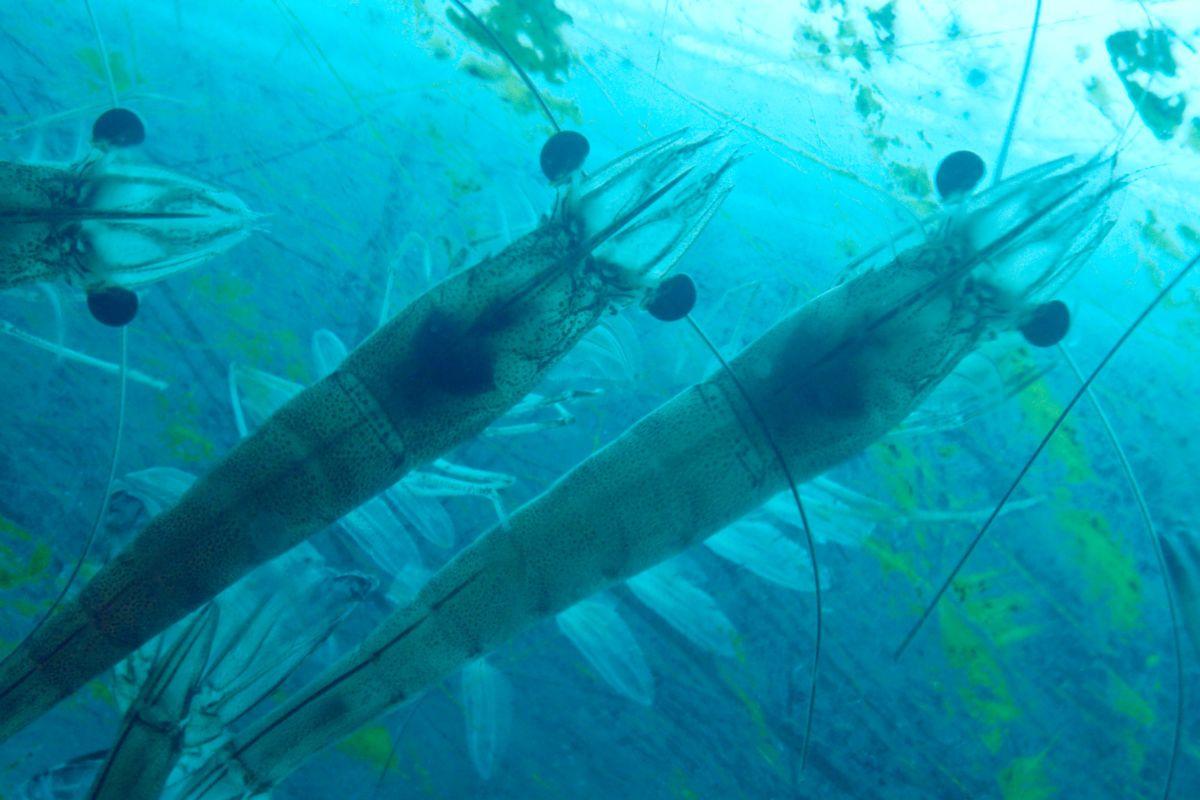
Maintaining stable shrimp pond water quality is fundamental to successful aquaculture production. Among the nitrogen compounds that require close attention, ammonia is particularly important because its more toxic un-ionized form can negatively affect shrimp under unsuitable pond conditions.
Effective ammonia control in shrimp ponds should not depend on one corrective treatment alone. A stronger approach combines water-quality monitoring, responsible feeding, adequate aeration, pond-bottom management, organic-load control and appropriate biological management.
Essential points
What to remember
Ammonia exists mainly as ammonium and un-ionized ammonia in pond water.
Pond pH and temperature influence the proportion of toxic un-ionized ammonia.
Feed waste, shrimp excretion and decomposing organic matter contribute to ammonia accumulation.
Effective control combines monitoring, aeration, feeding management and pond-bottom management.
What Is Ammonia in a Shrimp Pond?
Ammonia in aquaculture water exists mainly in two forms: ionized ammonium (NH₄⁺) and un-ionized ammonia (NH₃). Together, these forms contribute to Total Ammonia Nitrogen, commonly referred to as TAN.
The distinction is important because un-ionized NH₃ is considerably more toxic to aquatic animals than the ionized ammonium form.
An ammonia result should therefore not be interpreted independently. Pond pH and temperature influence the balance between NH₄⁺ and NH₃ and should be evaluated alongside ammonia results.
Ammonia chemistry
NH₄⁺
Ammonium
NH₃
Ammonia
Higher pH and temperature can increase the proportion of un-ionized NH₃.
What Causes High Ammonia in Shrimp Ponds?
Ammonia is produced naturally through shrimp metabolism and the microbial decomposition of nitrogen-containing organic matter in the culture environment.
Uneaten feed, faecal material, dead plankton and accumulated organic residues can contribute to the nitrogen load of the pond.
As shrimp biomass increases during the production cycle, feed input and waste production may also increase. If ammonia production exceeds the biological capacity of the pond to transform nitrogen efficiently, ammonia can accumulate.
Formation pathway
How Can High Ammonia Affect Shrimp?
Exposure to unsuitable ammonia concentrations can create physiological stress and may negatively influence shrimp performance.
Potential effects can include changes in feeding behaviour, impaired growth and greater sensitivity to additional environmental challenges.
The actual impact depends on ammonia concentration, duration of exposure, shrimp species, life stage and surrounding water conditions.
Why pH and Temperature Matter for Ammonia Toxicity
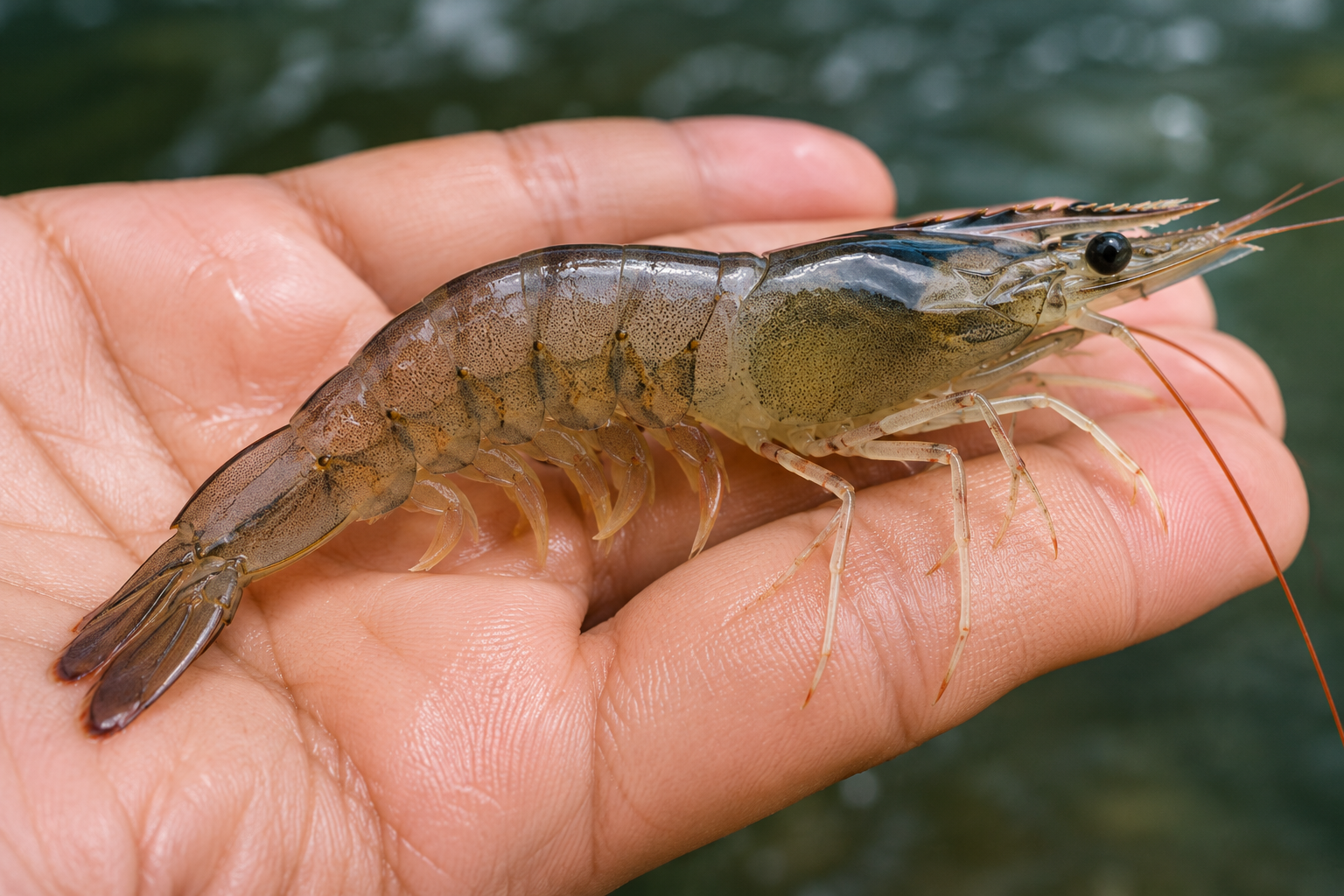
The relationship between ammonia, pH and temperature is one of the most important concepts in shrimp pond ammonia management.
As pH increases, a greater proportion of Total Ammonia Nitrogen can occur as un-ionized NH₃. Temperature also influences this chemical balance.
The same TAN measurement may represent different levels of concern under different pond conditions. Results should be interpreted together with pH and temperature.
Relationship
Pond parameters should be interpreted together.
What Water-Quality Parameters Should Be Monitored?
Ammonia should be evaluated as part of a broader shrimp pond water-quality monitoring programme.
Important parameters commonly considered alongside ammonia include pH, temperature, dissolved oxygen, nitrite, alkalinity and salinity.
Consistent monitoring records help farm managers identify trends and respond before changing pond conditions significantly affect production.
Monitoring panel
How to Manage Ammonia in Shrimp Farming
Effective ammonia management begins with prevention. Feeding practices should be adjusted according to shrimp biomass, appetite, culture stage and actual feed consumption.
Adequate dissolved oxygen is important for shrimp and for biological processes involved in maintaining pond stability. Aeration requirements may increase as biomass and feed input rise.
Pond-bottom management is important because accumulated sludge and organic matter can contribute to deteriorating water and sediment conditions.
Corrective actions should be selected according to actual water-quality measurements and farm conditions rather than applying the same treatment to every pond.
- Measure ammonia, pH, temperature and dissolved oxygen consistently.
- Review feeding rates and actual feed consumption.
- Maintain sufficient aeration for the pond biomass.
- Monitor sludge and accumulated organic matter.
- Record management actions and evaluate the pond response.
Management cycle
Measure
Collect reliable readings
Interpret
Compare trends
Act
Apply targeted action
Review
Measure response
Role of Beneficial Microorganisms in Water-Quality Management
Microbial management is commonly incorporated into modern aquaculture water-quality programmes.
Selected beneficial microorganisms may support organic-matter degradation and nutrient transformation when environmental conditions are suitable.
Performance can depend on microbial strains, product quality, oxygen availability, organic load, pond conditions and application practices.
Microbial products should complement good feeding practices, aeration, pond management and routine monitoring rather than replacing these fundamentals.
Building a Preventive Ammonia Management Strategy
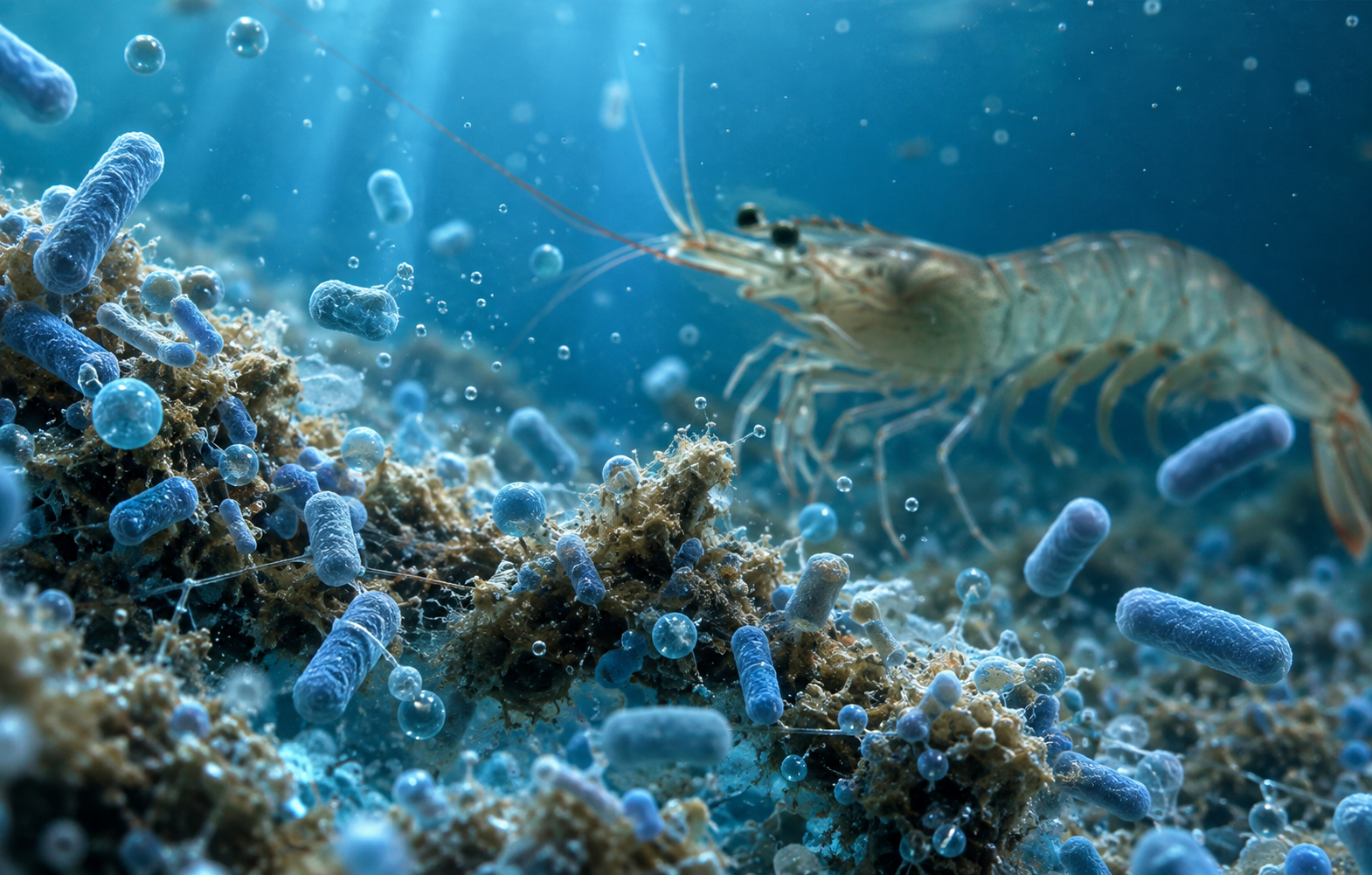
A stronger long-term strategy focuses on managing the conditions that allow ammonia to accumulate instead of relying only on corrective action after ammonia has increased.
A prevention-first programme combines regular measurement, trend analysis, feed management, adequate aeration, organic-load control, biological management and timely intervention.
Reliable records and farm-specific decisions can support more stable culture conditions throughout the production cycle.
Quick answers
Frequently asked questions
01What causes ammonia to increase in shrimp ponds?+
Common contributors include uneaten feed, shrimp waste, decomposing plankton, accumulated organic matter, increasing biomass and insufficient biological conversion of nitrogen compounds.
02Why does pH affect ammonia toxicity?+
As pond pH increases, a greater proportion of Total Ammonia Nitrogen may occur as un-ionized ammonia, which is the more toxic form.
03Does temperature affect ammonia in shrimp ponds?+
Yes. Temperature influences the balance between ionized ammonium and un-ionized ammonia, so it should be considered when interpreting results.
04Can probiotics help with ammonia management?+
Selected beneficial microorganisms may support organic-matter degradation and nutrient transformation, but they should complement feeding, aeration and pond-bottom management.
05Which parameters should be monitored with ammonia?+
Pond pH, temperature, dissolved oxygen, nitrite, alkalinity and salinity are commonly considered alongside ammonia results.
Technical references
- 01
Water-quality principles. Standard aquaculture guidance relating to ammonia chemistry, pond monitoring and nitrogen management.
- 02
Industry practice. Commercial shrimp-farming practices relating to feeding, aeration, pond-bottom management and production monitoring.
- 03
Technical review. Educational content that should be adapted to farm-specific measurements and professional guidance.

About the author
Innovare Biopharma Technical Team
Aquaculture Technical & Product Knowledge Team
The Innovare Biopharma Technical Team develops practical educational resources covering shrimp health, aquaculture water quality, nutrition, microbial management and responsible pond-management strategies.
Published: 12 August 2026
Reviewed: 12 August 2026
Continue learning